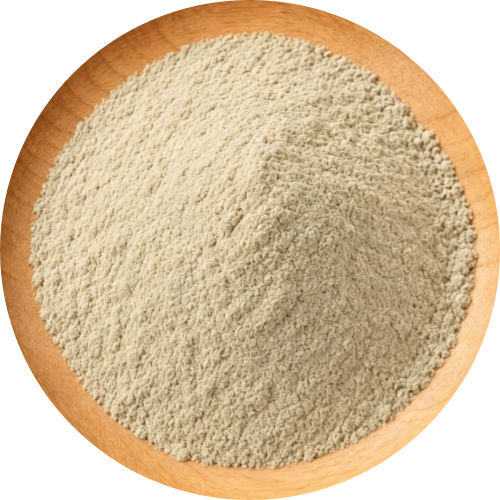
Liposomal NMN is β-nicotinamide mononucleotide carried inside a phospholipid bilayer rather than blended loose with a carrier. It is a healthcare-grade ingredient supplied in bulk for further manufacture, not a consumer product. Most enquiries come from a liposomal supplement manufacturer scaling a NAD+ capsule or stick-pack line, from contract manufacturers running powder blends for several brand clients, from micropellets manufacturers putting the same active into a sustained-release bead, and from brand owners who want a documented raw material they can label as their own. What they have in common is a formulation that cannot rely on plain NMN powder to hold its potency through blending and shelf life. Encapsulation changes how the ingredient behaves in your plant. The active is held inside the lipid rather than exposed on the surface of the powder, and the particles are built to a narrow size band, so the NMN disperses evenly instead of separating from the blend during filling. That is the difference between a claim you can defend and one you can only imply. The same technology runs across our liposomal vitamins line, so a range built on NMN can grow without changing the delivery platform underneath it. Because our range also covers the lecithin itself, the sunflower lecithin powder supplier and the encapsulation team are coordinated in one place, so the carrier and the finished ingredient are qualified together. That matters when a brand wants the lipid named on the label as well as in the process. A bilayer, not a blend. The sunflower lecithin is processed into a phospholipid bilayer that surrounds the NMN, so the active sits inside the lipid rather than being scattered through it — the difference between a true liposomal ingredient and a liposomal supplements powder that is only blended. Non-GMO carrier. The lecithin is non-GMO, and as a sunflower lecithin powder supplier we can ship the carrier alongside the encapsulated ingredient when you want one qualified source across several formulas. Efficiency checked at release. Encapsulation efficiency and assay are tested by HPLC on every lot, so the coating is verified rather than assumed. A soy option. Where a label or a cost target supports soy, the same encapsulation runs on a soy system, and as a soy lecithin supplier we can document that source in the same batch file. Protection through processing. The lipid shell limits exposure to moisture and heat during blending, drying and storage, which is where loose NMN powder usually loses potency. Built for your concentration. The same bilayer process runs at 50%, 70% or any custom concentration between 20% and 80%, so the delivery system does not have to change when the potency does.
Every batch ships with its own certificate of analysis, and the numbers are worth reading line by line. On a recent 70% lot (batch KYLNM2025050602), β-nicotinamide mononucleotide assayed at 71.1%, inside the 70% ±5% release window; loss on drying was 0.82% against a limit of 5.0% or less; arsenic was at or below 2.0 ppm and lead at or below 3.0 ppm; microbiology met the release limits; and particle size held at 90% or more through 20 mesh.
Those results cover what a liposomal supplement manufacturer's QA reviewer asks first: whether the active content matches the label, whether the powder is dry enough to stay stable, whether heavy metals are controlled, whether the material is microbiologically clean, and whether it will behave the same way in the blender.
Encapsulation efficiency, drug loading, residual solvents and moisture are released against internal specifications for each grade, and the current limits with the typical batch range go out with the specification sheet. We send both before you write your purchase specification, which is what you should expect from a nutraceutical ingredients supplier on a healthcare-grade ingredient.
Read each certificate as the lot arrives rather than relying on one from an earlier delivery, and keep a retained sample from every shipment next to it. If a delivered lot falls outside the specification you approved, the batch file and your retained sample are what the investigation is built on.
| Document | What it covers |
| Certificate of analysis | Assay, loss on drying, heavy metals, microbiology and particle size for the batch |
| Product specification | Assay range, carrier system, appearance and particle size for the grade ordered |
| Technical data sheet (TDS) | Handling, dispersion and storage guidance for your process |
| Material safety data sheet (MSDS) | Hazard, transport and handling information for your EHS review |
| Ingredients list | NMN and non-GMO phospholipids, ready for label drafting |
| Allergen statement | Lecithin source and allergen status for the batch |
| BSE/TSE and GMO-free statements | Declarations for market-specific filings |
| Vegetarian statement | Supporting statement for vegetarian and vegan formulations |
| Process flow chart | The manufacturing route in the format your quality file expects |
| HPLC test methods | Assay and encapsulation test methods used at release |
| PAHs free declaration and CITES compliance | Supporting declarations for regulated markets |
| Stability and bioavailability studies | Available on request for formulation review |
| Certificates and revisions | Facility-level certificates; holder, scope, expiry and current document revision confirmed for the grade you buy |
| Property | Detail |
|---|---|
| Product | Liposomal NMN (β-nicotinamide mononucleotide) |
| Standard purities | 50% and 70% |
| Custom concentrations | 20% to 80% |
| Carrier system | Non-GMO sunflower lecithin; soy lecithin on request from a qualified soy lecithin supplier |
| Appearance | Off-white to light yellow fine powder |
| Particle size | 90% pass through a 20 mesh sieve |
| Encapsulation | Phospholipid bilayer, verified by HPLC release testing |
| Grade | Healthcare ingredient, trade supply only |
| Certification | BRC, ISO9001, ISO22000, Kosher, HALAL, FDA-registered facility |
| Dispersion | Disperses in aqueous and oil systems; recommended conditions confirmed for your process |
Choosing the right grade should not be guesswork. Our Xi'an-based team works with our supplier partners to help you match specification, purity and delivery form to your formulation, and we answer technical questions on assay methods, documentation and storage before you commit to a batch. If something behaves unexpectedly in your process, we follow it up with the supplying manufacturer, share batch records and COA data, and suggest a practical adjustment. Most enquiries are answered within one to two business days, and samples go out with the paperwork you need to assess them properly.
Standard production is 50% and 70%, and anything between 20% and 80% can be built to your specification. The custom band is useful when one brand wants to hold a single carrier system across several potencies, or when a finished dose has to hit a specific milligram figure per capsule. Tell us the target dose per unit and the dosage form, and we will confirm which grade fits and send the specification sheet for it.
Yes. The material is produced in an FDA-registered facility working to BRC, ISO9001 and ISO22000 systems, with Kosher and HALAL certification also in place. Those certificates are held at facility level, so ask for the certificate number, holder and scope that cover the exact grade you are buying, and check the expiry date against your own quality file. As a nutraceutical ingredients supplier we send the batch certificate, specification, TDS and MSDS with every order.
Yes — non-GMO sunflower lecithin is our standard carrier, and it can be supplied as a standalone powder alongside the encapsulated NMN when you want the same lipid source written into several formulas. As a sunflower lecithin powder supplier we hold the lecithin specification to the same documentation standard as the finished ingredient. If a label or a cost target supports soy instead, the same encapsulation runs on a soy system; tell us at enquiry so that soy lecithin supplier source is declared in the file from the start.
Start from the finished dose. The 70% grade puts more NMN into every milligram of powder, which helps when capsule fill weight is tight or when a liposomal supplements label needs a high milligram claim per serving. The 50% grade leaves more room for other actives in the blend and is often the easier starting point for a first launch or a multi-ingredient formula. Both run on the same carrier system, so moving between them later does not force a reformulation.
The carrier is non-GMO sunflower lecithin and the ingredient is not of animal origin, so it fits vegetarian and vegan formulations, and a vegetarian statement is available for your file. Allergen status is documented against the lecithin source for each batch. If your formulation uses soy rather than sunflower, say so at enquiry so it is declared and documented from the start rather than added to the paperwork later.
This grade is a liposomal powder. Where a project needs a sustained-release bead instead, our micropellets manufacturers partners form the active into multi-layer pellets, and the certificate, specification, TDS and MSDS follow the same structure, so your quality file does not need rebuilding. Our liposomal vitamins line applies this encapsulation platform to other actives, which lets a brand keep one supplier and one documentation set across a range.