Liposomal Ferric Pyrophosphate (8% Iron)
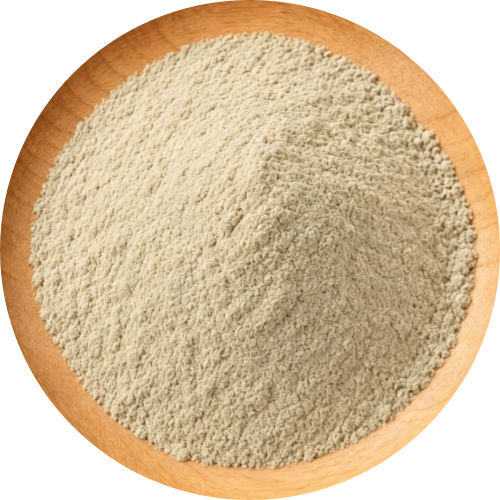
Liposomal iron powder from the same liposomal carrier family, supplied as a bulk ingredient for formulation.
View productMost sourcing projects start with a sample and hit the paperwork gap later. This guide reverses that order: it sets out the confirmed facts for Liposomal NAD 50% & 70% Sunflower Lecithin + Phytosterols, then shows what to confirm with any liposomal nad manufacturer before a grade is locked. It is written for buyers comparing quotations for bulk liposomal nad powder across the two declared potencies, so each section below ends in a decision you can actually action.

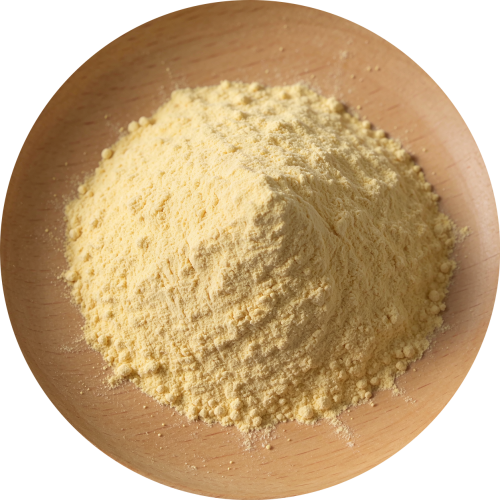
Our liposomal NAD powder uses sunflower lecithin plus phytosterols as the carrier system. Standard potency options include 50% and 70%. Please call us to discuss the specifications for your project.
The specifications below provide a starting point for your project. We welcome your call to discuss potency, carrier ratio and other requirements, and to explore a suitable specification together.
| Active ingredient | β-Nicotinamide Adenine Dinucleotide (NAD) |
|---|---|
| Format | Liposomal powder |
| Carrier system | Sunflower lecithin + phytosterols |
| Appearance | Off-white fine powder |
| Standard potency options | 50% / 70% — other specification requirements are welcome for discussion |
| Documentation | Available on request — no certificate or report data is published on the product page |
Seven questions to send before you accept a sample. Each one opens to the shape of a satisfactory answer — use that as your filter when replies come back.
Ask for 50% or 70% on the certificate of analysis and for the assay method behind it. A figure without a method cannot be compared across suppliers.
The name on the label should match the form inside the liposome, so the specification and the COA should use the same term.
Free NAD outside the liposome behaves differently in a formula. Ask for the measured encapsulated share and the test used, not a generic claim.
The carrier is part of the dose. Ask for the sunflower lecithin and phytosterol share so the carrier load in the formula can be calculated.
A sample should trace to a named lot. Compare the lot number on the sample, the COA and the packing list before any trial.
Particle size drives dispersibility. Ask for the measured range and the drying method before a capsule or sachet trial.
Specification sheet, COA, allergen and non-GMO statements and the packaging specification should be available before the purchase order, not after.
Both grades are liposomal NAD powder on the same sunflower lecithin and phytosterol carrier. The difference that matters at formulation stage is how much NAD you get per gram of powder — and therefore how much carrier the formula has to absorb.
| Decision dimension | 50% grade | 70% grade |
|---|---|---|
| Target dose per serving | Delivers less NAD per gram of powder, so a higher powder weight is needed to reach the same declared dose. | Delivers more NAD per gram, so the same declared dose is reached with a lower powder weight. |
| Dosage form fit | Commonly the practical choice where the serving can carry a larger powder mass — bulk powder blends and multi-gram sachets. | Commonly the practical choice where the fill weight is tight — small capsules, compact sachets or compressed units. |
| Carrier load introduced | Introduces proportionally more sunflower lecithin and phytosterols per unit of NAD, which the rest of the formula has to accommodate. | Introduces proportionally less carrier per unit of NAD, leaving more headroom for other actives and excipients. |
| Label declaration implications | The declared NAD figure on the label must reconcile with the assay basis stated for the 50% grade. | The same applies at 70% — and because the percentage is higher, the assay basis must be stated just as precisely. |
Request the spec sheet for the exact grade you intend to use — not the range as a whole — before the formula is frozen.
Confirm the potency basis in writing. "70%" only means something once you know what it is measured against.
Re-check the carrier contribution at your real dose. Carrier load, not the headline percentage, is what changes the rest of the formula.
Call us or send an inquiry to discuss your project. We can work through specifications, samples, documentation and quotation details together.
Share your target potency, application and estimated quantity. Standard options include 50% and 70%; if your project needs a different specification, please call us to discuss it.
Ask for the specification sheet and a representative certificate for the named grade. Since no certificate data is published on the product page, this request is the qualification step.
Settle pack format, net weight, sample quantity and lead time in days. None of these are published for this product, so they must come back to you in writing.
Contact us at any stage to discuss pricing. We can prepare a quotation around the specifications, quantity and packing requirements agreed for your project.
Four common sourcing situations, each tied to a confirmed product fact and the decision that follows from it.
Standard potency options include 50% and 70%, with different NAD content per gram of powder. Other specification requirements can be discussed with our team.
Pick the grade against your capsule fill weight first, then confirm the powder mass per capsule on the spec sheet for that grade.
The material is a liposomal powder described as an off-white fine powder, not a liquid or a granule.
Check the appearance tolerance and the carrier load at the grade you choose, since the carrier is a larger share of a 50% serving than a 70% one.
The carrier is sunflower lecithin combined with phytosterols, and that carrier pairing is the same for both grades.
Request a trial sample and ask directly how the carrier behaves in your compression route — the carrier, not the NAD percentage, is the variable to test.
Both grades are listed under a single product entry, so the documentation for each is requested separately.
Request the spec sheet and a representative certificate for both 50% and 70% before choosing, and lock pack format and lead time alongside the price.
We welcome your call to discuss potency, carrier ratio, quantity, packaging and delivery needs. Whether you are considering our standard 50% or 70% options or have other specifications in mind, our team can explore a suitable solution with you and help with samples, documentation and a quotation.
Keep adjacent product options together for a faster catalog comparison.
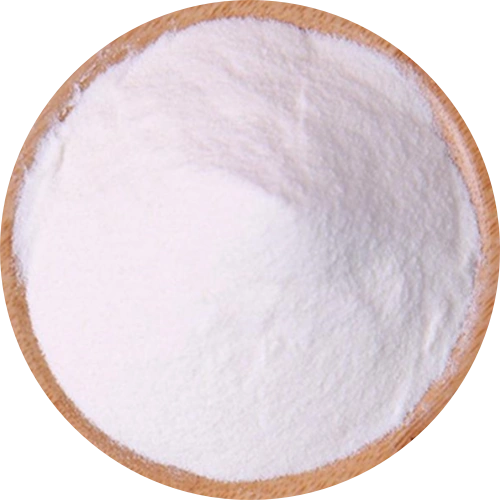
Liposomal iron powder from the same liposomal carrier family, supplied as a bulk ingredient for formulation.
View product →
Plant sterol powder that also appears in the carrier system of liposomal ingredients.
View product →
High-purity botanical extract powder supplied as a bulk specialty ingredient.
View product →Three notes to help clarify product requirements before contacting the supplier.
Bulk liposomal NAD powder evaluation starts with the trial the formulation team intends to run and the supplier answers needed before a sample request.
Read article →Lecithin and phytosterols are listed as the carrier in a liposomal NAD 50% and 70% spec, an off-white fine powder. Request a quote with your target kg.
Read article →Liposomal NAD powder listings name an active, a lipid carrier and a powder format, not a finished supplement; standard MOQs run from 1 kg to 20 kg. Get listing data.
Read article →the active ingredient is β-nicotinamide adenine dinucleotide (nad), supplied in liposomal powder form.
Standard potency options include 50% and 70%. Other specification requirements are welcome for discussion. Please call us to explore the right option for your project.
the carrier system is sunflower lecithin plus phytosterols. the same carrier pairing applies to both the 50% and 70% potencies.
it is described as an off-white fine powder.
the listing describes it as a liposomal powder rather than a liquid.
no certificate or report details are published for this listing. request the specification sheet and a representative certificate for the exact potency you plan to use before placing an order.
