Introduction: Carrier names in a liposomal NAD powder specification identify the materials used to build the particle and give formulation teams a concrete starting point for supplier questions, while carrier performance data remains a separate inquiry.
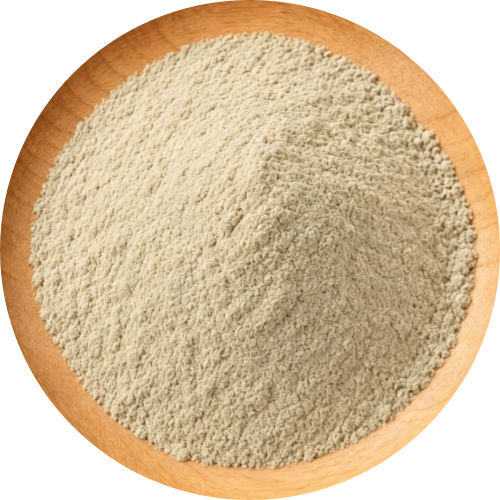
Liposomal NAD 50% & 70% Sunflower Lecithin + Phytosterols lists Sunflower Lecithin + Phytosterols as the carrier and describes the material as an off-white fine powder. These details help a formulation reviewer describe the raw material to colleagues, plan a sample review, and prepare questions on composition, particle size, encapsulation, process, stability, and documents. Carrier ratio, particle size, encapsulation rate, process, stability, and performance evidence are confirmed through direct supplier discussion.
Lecithin is a phospholipid material. Phospholipids have a hydrophilic head group and two hydrophobic tails, so they form bilayer sheets in water; this structure supports their use in liposomal systems (OpenStax). Sunflower lecithin supplies that phospholipid foundation from a plant source. In a liposomal NAD powder specification, the lecithin entry points to a phospholipid-based shell. Phytosterols are plant-derived sterols with a rigid, multi-ring structure. In a lipid bilayer, sterols sit between phospholipid molecules and influence membrane packing, which makes them a structural component (OpenStax). Read together, the two names describe a carrier made from a plant phospholipid and a plant sterol. The ratio between them, the total lipid share, and the method used to combine them require direct supplier discussion. The physical form is also useful for handling. The product is an off-white fine powder, which is what a receiving team handles, weighs, and disperses. Appearance is a quick check on arrival and supports incoming material identification. Finer morphology requires imaging such as scanning electron microscopy (NIST). A powder can look even while its particle population is broad, so appearance is an initial check and measured distribution is the structural detail. For a formulation reviewer, the carrier name answers which material family to discuss and which supplier questions to open; it gives a clear basis for comparing samples before moving into measured specifications.
A carrier name identifies composition. Particle size and encapsulation rate are measured values. They come from different methods and support different decisions. The carrier name lets a formulator describe the material accurately; particle size helps plan the dispersion step; encapsulation rate describes the share of NAD inside the shell. Each answer requires its own data and shapes the next supplier question. A composition statement may also include one phospholipid and one sterol while leaving out the ratio, the total lipid content, and the drying route, so the formulation brief should separate composition, particle measurement, encapsulation measurement, and process evidence.
The carrier identity sets the structure questions. With a phospholipid-plus-sterol system, the productive asks are the phospholipid-to-sterol ratio, the total lipid share of the powder relative to NAD, and whether the sterol is present as free phytosterol or a modified form such as an ester. Ratio matters because sterol content in a bilayer influences packing behavior, and packing affects how the bilayer behaves during dispersion. Ask whether the carrier contains only those two materials or additional excipients. Ask how the carrier is described in the specification sheet and whether the batch certificate reports the same carrier identity. These answers show how closely a sample matches the composition you were quoted and give the analytical team a clear basis for planning dispersion trials. If the response names “sunflower lecithin” without a phospholipid profile, request the phospholipid content and the specification range, because lecithin is a mixture and its composition can vary by grade.
Particle size is usually handled later than the carrier name, so ask early and ask specifically. Request the method behind the number, whether the measurement was taken on a liquid dispersion before drying or on the reconstituted powder, and the full distribution. A mean on its own hides a broad population; D10, D50, and D90 show the spread. Ask for the dispersion medium and preparation steps as well, so your lab can reproduce the supplier's result. Encapsulation rate needs a parallel question set: the analytical method, the separation step used to distinguish free NAD from encapsulated NAD, the sample preparation, and whether the value refers to the powder or a reconstituted dispersion. Record the method beside the number so later comparisons use the same basis. For the powder, request the drying route and any reconstitution guidance, because the route from liquid dispersion to off-white fine powder shapes the questions your lab must ask before running a trial.
An initial formulation review often starts with a formulator reading the carrier name and drafting a trial brief, followed by a short call with a liposomal NAD manufacturer. Group the questions into four blocks: carrier composition, particle and encapsulation measurements, drying process, and documents. Two or three questions per block keep the call focused and produce a written record for later review. For the carrier block, ask for the phospholipid-to-sterol ratio, the total lipid share of the powder, and the sterol form. For the process block, ask whether the powder is dried from a liquid liposomal dispersion and by which route. For the measurement block, request particle size distribution with method and conditions, encapsulation rate with its analytical method, and an explanation of how free NAD is separated from encapsulated NAD. For the document block, ask for the specification sheet, batch certificate of analysis, safety data sheet, and stability data for your storage conditions. Confirm whether the production batch follows the same specification as the sample, and request the sample lot number so documents and test material can be matched. Keep the answers in one file so the next material review can use a consistent comparison. Keep Ingredients lists Sunflower Lecithin + Phytosterols as the carrier for Liposomal NAD 50% & 70% powder, supplied as an off-white fine powder. For carrier ratio, particle data, encapsulation information, and lot documents, contact the team directly with your formulation brief and the carrier questions you have prepared. Ask for the specification sheet and a sample lot together, so the details you receive and the material you test stay connected through evaluation.
Sunflower lecithin and phytosterols identify the carrier as a plant phospholipid plus a plant sterol, supplied as an off-white fine powder. Those names help formulators describe the material and start a supplier conversation. Ratio, particle size, encapsulation, process, stability, and documents are separate details to request and record. With a structured question set, carrier systems can be compared on measured facts rather than product names alone.
A: They are the carrier materials for this product. Sunflower lecithin supplies the phospholipid that forms the bilayer shell, and phytosterols are plant sterols that sit within the bilayer as structural components. Together they describe the particle around NAD in the powder. The carrier for Liposomal NAD 50% & 70% powder is Sunflower Lecithin + Phytosterols.
A: The carrier name identifies composition. Particle size and encapsulation rate are measured values produced by specific analytical methods. Request those figures with the method and test conditions behind them. For particle size, ask for the full distribution rather than a single headline number, and for encapsulation rate, ask how free NAD is separated from encapsulated NAD.
A: Request the phospholipid-to-sterol ratio, total lipid share, sterol form, particle size distribution with method and dispersion conditions, encapsulation rate with its analytical method, and how the powder was dried. Pair those details with the specification sheet, batch certificate of analysis, safety data sheet, and stability data for your storage conditions. Ask for the sample lot number so documents and test material match.
3.3 Lipids - Biology 2e | OpenStax
5.1 Components and Structure - Biology 2e | OpenStax
Scanning-electron microscopy | NIST
Liposomal NAD 50% & 70% Sunflower Lecithin + Phytosterols | Keep Ingredients