DOWNLOAD TDS of Lichen Vitamin D3 Oil (MCT Oil)
Vitamin D3, cholecalciferol, is the form the human body makes from sunlight. Commercially it usually arrives as a lanolin or fish derivative, which is precisely the problem for a brand selling to vegans and vegetarians. This grade is built from plant material instead — lichen and pine — and carried in an edible oil so it drops straight into the fat phase of a formula without a drying step. Formulators dilute it into a batch oil, a capsule fill or a carrier powder to reach the IU per serving that goes on the label. Formulators comparing 1,000,000iu/g vitamin D3 oil manufacturers are usually checking two things at this stage: whether the assay is HPLC-verified, and whether the carrier matches the line they already run. The lichen variant is the one most teams meet first. Supplement brands, contract manufacturers, functional food and beverage developers, and personal care formulators use it where a vegan claim has to survive scrutiny. The material is 100% vegan.
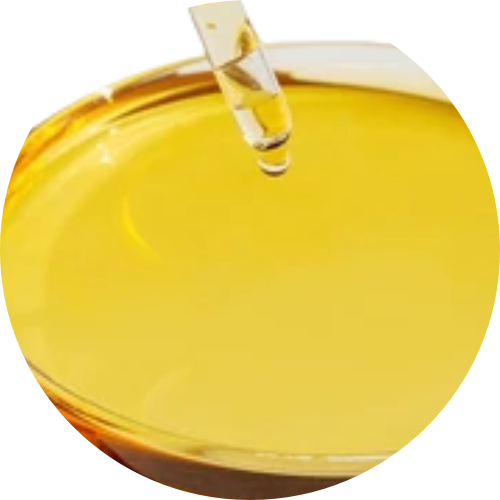
Lichen Vitamin D3 oil manufactuers work from a plant sterol fraction rather than a lanolin one, and the cholecalciferol that comes out is the same molecule the body produces — only the route to it has changed. Physical form: a light yellow viscous oil. It pours slowly at room temperature, which is normal at this potency and tells you the carrier is doing its job rather than being thinned out. Solubility: freely soluble in MCT oil and other lipid-based systems, so it drops into a softgel fill or an oil-phase premix without an emulsifier and without a heating step to dissolve it. Ideal fit: softgels, liquid drops, lipid emulsions, and any process that already handles an MCT carrier — which covers most of the supplement industry. Vegan vitamin D3 MCT oil manufacturers usually quote this variant by its carrier, because MCT is the part that decides how the oil behaves on your line. Ask for the solvent-residue figure at the same time; it comes from the same sheet. The pine variant is a cholecalciferol dissolved into an edible vegetable oil with tocopherol, and it comes out colourless to yellowish and odourless. In sensory terms it is the version that disappears into the product rather than sitting on top of it. Solubility follows the carrier: it is soluble in edible vegetable oils and tocopherol blends, which is why it behaves well in a fat phase built on sunflower, rapeseed or olive oil — the same oils a fortified drink or a bar already contains. The pine variant is, in effect, selling neutrality. A fortified milk, a gummy or a breakfast bar cannot afford a vitamin note at the back of the throat, and an odourless oil is how that is avoided without masking agents. The tocopherol is not only a carrier component. It also acts as an antioxidant in the blend, which helps the oil hold its peroxide value through storage and gives the formulator one less thing to add separately. If you have been sourcing from vegan vitamin D3 olive oil manufacturers, the pine variant will feel familiar on the line — but check the tocopherol level against your own antioxidant budget before you reformulate, because you may be able to reduce what you were adding.
Bone health is where vitamin D3 earns most of its formulation budget. It supports the absorption of calcium and phosphorus, and brands building bone-health products usually pair it with vitamin K2 so the two nutrients act on the same pathway rather than separately.
It also contributes to normal immune system function and to cellular health. Those are nutrient-function statements rather than treatment claims, which keeps the finished product inside permitted wording in most markets.
Muscle function and everyday vitality complete the picture, and they matter commercially because fatigue and low mood are what consumers actually search for. Vitamin D status is a familiar topic for anyone who works indoors or lives through a dark winter.
Populations with limited sun exposure are the clearest use case: northern latitudes between November and March, night-shift workers, people who cover up for cultural or medical reasons, and anyone whose dermatologist has told them to stay out of the sun.
The vegan angle is not a footnote on this product. A clean-label, plant-sourced vitamin D3 — the kind vegan vitamin D3 MCT oil manufacturers supply — lets a brand make a statement that the conventional lanolin material simply cannot support, and that statement is often the reason the product exists at all.
The specification sheet is the document to read before anything else. It lists the assay and the method behind it, the heavy-metal limits, acid and peroxide value, and the microbiological limits — each one tied to a named USP or EP method rather than left open.
Assay is measured by HPLC at ≥1,000,000 IU/g. That is a concentrate figure, so any dilution calculation starts here rather than from a finished-dose number, and it is the figure that has to hold across batches for your overage to make sense.
Acid value and peroxide value are the rows buyers of oils learn to check first. They track hydrolysis and oxidation respectively, and a tight peroxide limit is the difference between an oil that ages gracefully inside a softgel and one that turns before the product reaches its marked expiry date.
Microbiology follows the USP chapters: total aerobic count, moulds and yeasts, and absence of Salmonella and E. coli in the stated sample sizes. It is a release gate rather than a marketing number — nothing ships if it fails.
Nutraceutical and prescription-grade supplement inputs need a paper trail as much as a specification. This grade is tested to USP, EP and BP methods, and the method for each test is printed alongside the limit rather than left to interpretation. Impurity control is where an oil shows its quality. Lead, arsenic, cadmium and mercury are each capped, acid value is held to ≤2.00 mg/kg and peroxide value to ≤7.50 mmol/kg — and those last two are early warnings of oxidation in a lipid, read long before a taste panel notices anything. Microbiology is specified to USP chapters: total aerobic count, moulds and yeasts, and absence of Salmonella and E. coli in the stated sample sizes. That is the set a quality reviewer asks for first when a new supplier is being assessed. Before you file, confirm the regulatory status for your specific market with our team. Pharmacopeial compliance is one part of a submission, not the whole of it, and it is better to establish that at the enquiry stage than after the container has shipped.
The lichen variant is carried in MCT oil, and its residue limits sit alongside the potency figure: solvent residue ≤5000 PPM, with pesticides controlled to USP. Lichen vitamin D3 oil manufacturers who publish those numbers are telling you something about how clean the extraction route is, not just how strong the oil is. That solvent-residue figure matters if your market asks for a clean-label statement, because it is the number a reviewer looks for when the extraction route comes up in a supplier questionnaire. It is a straightforward thing to check before a formulation is locked. The pine variant runs to different checks: moisture and volatiles ≤0.10% and insoluble impurities ≤0.05%. Low moisture keeps an oil from clouding and from hydrolysing slowly in the container, which is why it is treated as a specification row rather than a housekeeping detail. Insoluble impurities at ≤0.05% is really about clarity. In a softgel or a clear liquid drop, sediment is visible, and a consumer spots it long before anyone reads a certificate of analysis. This is one figure vegan vitamin D3 olive oil manufacturers are usually asked for first, because a vegetable-oil carrier shows sediment more readily than MCT does. Saponification value and refractive index complete the identity set. They are not potency measures — they confirm that what arrived is the oil you ordered, which is exactly what incoming quality control needs when a drum is opened six months into a contract.
| Feature | Lichen Source | Pine Source |
|---|---|---|
| Core Ingredient | Plant-derived Cholecalciferol | Plant-derived Cholecalciferol |
| Potency | ≥1,000,000 IU/g | ≥1,000,000 IU/g |
| Physical Form | Light yellow viscous oil | Colorless to yellowish odorless oil |
| Solubility | Soluble in MCT oil & lipid-based systems | Soluble in edible vegetable oils & tocopherol blends |
| Vegan Compliance | 100% Vegan | 100% Vegan |
| Quality Standards | USP/EP/BP Compliant | USP/EP/BP Compliant |
| Test Item | Specification | Test Method |
|---|---|---|
| Assay (Vitamin D3) | ≥1,000,000 IU/g | HPLC |
| Heavy Metals (as Pb) | ≤2.00 ppm | USP<251>, EP2.4.10 |
| Arsenic (as As) | ≤2.00 ppm | USP<211>, EP2.4.2 |
| Cadmium (as Cd) | ≤1.00 mg/kg | USP233 |
| Mercury (as Hg) | ≤0.10 mg/kg | USP233 |
| Acid Value | ≤2.00 mg/kg | USP<401>, EP2.5.1 |
| Peroxide Value | ≤7.50 mmol/kg | USP<401>, EP2.5.5 |
| Total Aerobic Microbial Count | ≤1000 cfu/g | USP<2021>, EP2.6.12 |
| Moulds & Yeasts | ≤100 cfu/g | USP<2021>, EP2.6.12 |
| Salmonella | n.d./25g | USP<2022>, EP2.6.13 |
| Escherichia coli | n.d./10g | USP<2022>, EP2.6.13 |
| Carrier | MCT Oil |
|---|---|
| Solvent Residue | ≤5000 PPM |
| Pesticides | Complies with USP<561> |
| Moisture & Volatiles | ≤0.10% |
|---|---|
| Insoluble Impurities | ≤0.05% |
| Saponification Value | / |
| Refractive Index | / |
| Source | Processing Steps |
|---|---|
| Lichen | Lichen Sterol Extraction → Purification → Actinism Reaction → Crystallization → Mixing with MCT Oil & Vitamin E → Filtration → Testing → Packaging |
| Pine | Vegetable Oil + Tocopherol + Vitamin D3 → Melting Tank Mixing & Dissolving → Testing → Weighing → Packaging → Warehousing |
| Product Name | Specification | Application |
|---|---|---|
| Vegan Omega-3 Oil | ≥50% ALA | Supplements, functional foods |
| Plant-Based Vitamin K2 | ≥98% Purity | Bone health supplements |
| Vegan Vitamin B12 Powder | ≥1% Cyanocobalamin | Fortified foods, capsules |
| Organic Spirulina Extract | ≥60% Protein | Superfood blends, supplements |
Small-quantity orders are accepted, so a first trial does not have to be a bulk commitment, and the same grade scales to production volumes once the trial works. Tell us the quantity and the pack format and we will confirm what is available.
Lead time is 5-15 days. If you are working to a launch date, say so at enquiry stage and we will tell you honestly what is achievable rather than what you would like to hear.
Shipping runs on DDP, DAP, CIF, FOB or express, depending on the destination and how much control you want over the movement. Send the delivery address with your enquiry and we will quote the right term for it.
Export documentation is prepared with the shipment: certificate of origin, bill of lading and the compliance statements that accompany the batch.
Payment terms, quotation validity, acceptance criteria against the specification, and the window for raising a claim are agreed per order — confirm them with your sales contact before the order is placed. If you need material for research or quality testing first, ask about sample availability and the terms that apply.
Choosing the right grade should not be guesswork. Our Xi'an-based team works with our supplier partners to help you match specification, purity and delivery form to your formulation, and we answer technical questions on assay methods, documentation and storage before you commit to a batch. If something behaves unexpectedly in your process, we follow it up with the supplying manufacturer, share batch records and COA data, and suggest a practical adjustment. Most enquiries are answered within one to two business days, and samples go out with the paperwork you need to assess them properly.
Every batch is tested before and after production, and only material that meets the USP, EP and BP criteria on the specification sheet is released for shipment. The certificate of analysis travels with the batch and carries the assay, heavy metals, microbiology, acid value and peroxide value, each with the method used to obtain it. Retained samples and batch records let us trace a question back to the drum it came from, which is what an audit actually asks for rather than a certificate on a wall. Buyers auditing a supplier normally want the non-GMO statement, the allergen-free certificate and the ETO-free certification. We can provide all three alongside the batch documents. Our certification set covers ISO 22000, HACCP, Kosher and Halal, with FDA facility registration documentation. Ask us to confirm the exact certificate and holder for the grade and market you are filing in — scope matters more than a logo. Third-party testing can be arranged when your own quality team needs an independent result rather than one produced by the supplier.
They cover the oil-friendly formats well: softgels, liquid-filled two-piece capsules, drops and oil-based emulsions all take the concentrate directly. Where a format is dry — sachets, tablets, drink mixes — the oil has to be plated onto a carrier or converted to a powder first, and that is a development conversation rather than a straight swap. Tell us the format and we will say plainly whether the oil drops in or needs work before you commit to a mould or a filling line.
Yes. Blended formulations, capsule and gummy projects and functional beverage concepts are all workable, with the blend built around your specification while staying inside USP, EP and BP quality and full vegan compliance. Send the target IU per serving, the carrier you want and the dosage form, and our technical team will come back with a proposal rather than a catalogue number.
Two things back it up. The lichen route starts from a plant sterol fraction rather than lanolin, and the pine route uses a vegetable-oil carrier with tocopherol — no animal input at any stage. On paper, the vegan claim is carried through from the source material and backed by the batch documentation. Ask for that trail and check it against the exact wording your own label uses.
Start with the assay and its method — HPLC at ≥1,000,000 IU/g — then read acid value and peroxide value together, because those two tell you how the oil has aged since it was produced. If a row is missing or the method is not named, ask for a reissued certificate before the material goes anywhere near production.
More than most specification rows. A fortified milk, a gummy or a soft chew carries the vitamin at a low level, but the oil still sits in the matrix and any note at all reads as a flavour defect to a consumer. Pine vitamin D3 oil manufacturers build on a vegetable-oil and tocopherol base precisely for that neutrality, which is why this version is the one to reach for in food and confectionery rather than in a softgel.
It is measured by HPLC, and the method is named on the specification row rather than implied by the figure. Batch-to-batch variation exists in any material, so the assay range for recent lots is the useful figure when you are setting an overage. If your formulation has no room for variation, ask for that range before you fix the overage; it is a reasonable thing to ask for.