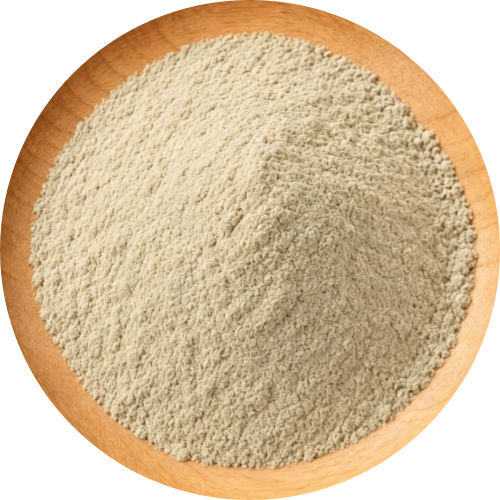
This is an OEM liposomal series rather than a single ingredient: more than 30 actives encapsulated in a phospholipid carrier, supplied as a fine powder or a liquid suspension, in Grades A, B and C, at concentrations from 20% to 80%. Every grade is made to a specification you approve before a bulk run is scheduled. The range is built for teams launching liposomal supplements rather than blending a standard extract with lecithin themselves. Brand owners, contract manufacturers and private-label formulators use us as their liposomal supplement manufacturer: they bring an active and a target dose per serving, and we match the carrier, the loading and the particle size to that brief. Carriers are non-GMO soy or sunflower lecithin, and the phosphatidylcholine content of that lecithin — 12%, 20%, 50% or matched to your specification — shapes both the encapsulation behaviour and the grade you receive. Our soy lecithin supplier chain and our sunflower chain are qualified separately for exactly that reason, so a carrier decision never quietly changes the specification. Supply is bulk only: no small-format packs and no consumer orders.

| Document | What it covers |
| Certificate of analysis | Batch results released against the specification for the grade you ordered |
| Product specification | The released parameter set for that grade and active |
| TDS and MSDS | Technical and handling data for formulation and EHS teams |
| Ingredients and composition list | Carrier and excipient declaration for label and regulatory review |
| Production flow chart | The process route from raw material to packed batch |
| Particle size distribution analysis | The measured distribution behind the specification index |
| Allergen and BSE/TSE statements | Declarations your import and QA teams file with the batch |
| GMO-free and vegetarian statements | Carrier-source declarations for soy or sunflower lecithin, traced back to our sunflower lecithin powder supplier or the qualified soy chain |
| PAH-free and CITES declarations | Supplied where the market or the active requires them |
| Stability and bioavailability studies | Supporting data held for the grade you order |
| Bulk photographs | Images of the actual batch and packing before it ships |
| Certificates | BRC, ISO 9001, ISO 22000, HACCP, Kosher and HALAL, produced in an FDA-registered facility |


Grade A carries the highest active load and the tightest particle-size window; Grade C is the leaner specification used on high-volume lines where a lower load still meets the label claim; Grade B sits between the two. They are specifications rather than quality tiers — each is defined by its own set of limits — so the real question is which load your capsule size and label claim can carry.
Carriers are non-GMO soy lecithin or non-GMO sunflower lecithin. Soy remains the default because most formulations and most markets accept it; sunflower is specified when a label has to stay soy-free or a sales channel will not list soy. The sunflower powder is qualified through a dedicated sunflower lecithin powder supplier chain rather than bought opportunistically, because changing carrier source mid-project means re-approving the whole specification.
Phosphatidylcholine content in the lecithin is normally 12%, 20% or 50%, or matched to a figure your specification names. PC is what actually forms the bilayer, so a higher share builds a tighter, more uniform vesicle and usually a higher encapsulation efficiency, while a lower share keeps the material workable at volume. This is the variable most often left out of a brief and most often behind a disappointing first sample.
Drug loading — the share of active in the finished liposomal material — is normally 50% or 70%. A 70% load suits compact capsule formats and lowers excipient weight per serving; 50% leaves more carrier around each unit of active and can disperse more easily in a powder blend. Neither is better in the abstract; it depends on the dose you have to fit.
Particle size is standardised at 100–300 nm or to whichever index your specification states, and transmission electron microscopy is the check that vesicles actually formed rather than the active sitting dry inside lecithin. Some quality teams want TEM images filed with every batch; others accept particle size distribution and encapsulation efficiency. Say which at the specification stage so the batch record is built to match.
Beyond these variables we build grades around actives that are not on the list — in practice any liposomal type, provided the raw material can be sourced and the load is achievable. That is the difference between buying from a catalogue and running an OEM liposomal programme with a nutraceutical ingredients supplier: the specification starts with your formula, not with our list.
| Liposomal format | Concentrations available |
| Liposomal vitamin C | 50%, 70% |
| Liposomal quercetin | 50%, 70%, 80% |
| Liposomal curcumin | 50%, 70% |
| Liposomal glutathione | 50%, 70% |
| Liposomal NMN and NAD | 50%, 70% |
| Liposomal NR and resveratrol | 50%, 70% / 50%, 60% |
| Liposomal CoQ10 | 20%, 50%, 70% |
| Liposomal milk thistle and berberine HCl | 30%, 50%, 70% / 50%, 70% |
| Liposomal melatonin, PQQ and niacinamide | 50%, 70% / 30% / 50% |
| Liposomal vitamins A, D3 and E | 70% / 50,000 IU / 50% and 48% |
| Liposomal ceramide and betaine | 3% / 50% |
| Liposomal minerals and amino acids | Zinc, magnesium, calcium, L-leucine, L-valine and others to your specification |
Choosing the right grade should not be guesswork. Our Xi'an-based team works with our supplier partners to help you match specification, purity and delivery form to your formulation, and we answer technical questions on assay methods, documentation and storage before you commit to a batch. If something behaves unexpectedly in your process, we follow it up with the supplying manufacturer, share batch records and COA data, and suggest a practical adjustment. Most enquiries are answered within one to two business days, and samples go out with the paperwork you need to assess them properly.

Liposomal vitamin C is supplied at 50% and 70%, and liposomal quercetin at 50%, 70% and 80%. Those are the two most requested grades in the range, so both sit on a standard specification rather than a made-to-order one. Both are built on non-GMO lecithin — soy by default, or sunflower from our sunflower lecithin powder supplier line when the label has to stay soy-free.
A liposome is a vesicle whose wall is a phospholipid bilayer, structurally close to a cell membrane. The aqueous core carries hydrophilic actives and the lipid layer carries hydrophobic ones, with cholesterol in the wall keeping the sphere from collapsing or deforming. That is why one platform can carry vitamin C and CoQ10 in the same programme. Whether a batch actually formed vesicles is confirmed by electron microscopy and particle size distribution, not by appearance alone.
Non-GMO soy lecithin and non-GMO sunflower lecithin, both food grade, qualified on phosphatidylcholine content — 12%, 20% or 50% as standard, or matched to your specification. PC content determines how much bilayer forms around a given mass of active, which is why it is agreed before loading is fixed. Working with us as your soy lecithin supplier keeps the carrier lot, its GMO-free statement and its allergen declaration traceable to the batch you receive.
Yes. You set the active, grade, lecithin source, loading, particle size and TEM requirement, and we build the grade to that specification; custom concentrations and formulations are the normal route rather than an exception. Working as the liposomal supplement manufacturer on the project means the batch record, the specification and the release data all trace back to the same production run, which is what your own customers' audits will ask for.
Every batch is released against its specification, with independent third-party testing behind that release for the parameters an importer will ask about. As a nutraceutical ingredients supplier working with US and EU buyers, we assemble documentation to match importer requirements — composition, allergen and GMO statements, TDS, MSDS and stability data among them. Certificates are issued per facility and per scope, so confirm that the scope covers your grade and destination before you commit to a volume.
By the release behaviour the formula needs. Liposomes improve how much of an active is absorbed and protect it through the digestive tract; micropellets are built for a controlled release curve over time and for a visible spherical bead in the finished capsule. If the brief is absorption, stay with this range. If it is timing, the micropellets manufacturers line is the right conversation, and we will say so before you commit to a trial.
Almost any active we can source as a suitable raw material. The catalogue covers over 30, from liposomal vitamins and minerals through to curcumin, berberine, glutathione and NMN, and the OEM route exists for the ones that are not listed. Send the active name, the target concentration and the dosage form, and we will confirm whether it can be held at that load and particle size before the specification is written.
Assay, encapsulation efficiency, particle size distribution, moisture, microbiological limits, heavy metals and residual solvents, with the release value and the analytical method behind each parameter. If your quality team works to tighter limits than ours — a lower heavy-metal ceiling, a narrower particle-size window, a declared solvent residue — send those targets and we will confirm in writing whether the grade can be released against them.