Introduction: Piperine is added to curcumin and resveratrol blends to support absorption, and understanding that supporting role changes how a formulator reads the whole formula.
Curcumin and resveratrol both look strong on a supplement label, yet both are polyphenols with well-known absorption limits: poor solubility in the gut, restricted membrane transit, and fast metabolic clearance before they ever reach circulation. A formulator stacking the two into one capsule is solving a delivery problem, not just a label problem. Piperine, the main alkaloid in black pepper extract, is the ingredient most often added to that kind of blend, and it operates as an assistant rather than a headline active. The mechanism is worth understanding because it explains why these blends are built the way they are.
Curcumin is the yellow polyphenol from turmeric root and a textbook example of a compound that is hard to absorb. It dissolves poorly in water, which limits how much can cross the intestinal lining, and what does get through is quickly conjugated in the gut wall and liver. The Linus Pauling Institute's curcumin summary describes exactly this pattern: extensive metabolism and rapid elimination keep systemic levels low after oral intake. Resveratrol, the stilbene found in grape skin and Japanese knotweed, follows a similar path. It is absorbed reasonably well in the gut but is heavily glucuronidated and sulfated during first pass, so the parent compound reaching plasma is a small fraction of what was swallowed. That shared bottleneck is why formulation teams stop treating dose as the only lever. Raising the milligrams of curcumin or resveratrol per capsule works up to a point, then runs into practical limits: capsule size, ingredient cost, and gastrointestinal tolerance. A better option is to change the environment the polyphenol passes through. In practice, that means pairing the main botanicals with a small amount of an ingredient that influences solubility, membrane transit, efflux, or metabolic clearance. This is the design logic behind absorption-supporting ingredients, and it is why piperine shows up in so many curcumin and resveratrol blends rather than only in single-ingredient products.
Piperine acts on several steps of the absorption pathway at once, which is what separates it from a simple solubilizer. The four steps below are the ones formulators usually walk through when explaining why a small inclusion rate of black pepper extract can shift the exposure profile of a polyphenol blend. Each is a mechanism concept rather than a fixed result, and the size of the shift depends on the compound, the dose, and the rest of the formula.
Reported effect sizes vary between studies, formulations, and the specific polyphenol involved, so the useful takeaway is directional. Piperine supports absorption, and the exact shift is measured per formula.
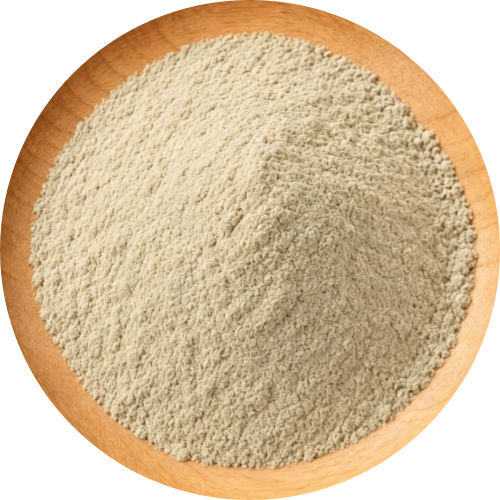
In a curcumin and resveratrol blend, piperine is present in a much smaller quantity than either polyphenol, and its role is deliberately narrow. It does not carry curcumin's or resveratrol's biological activity and is not meant to. Its job is to alter the pharmacokinetic environment so the two main botanicals behave better than they would alone. Formulators treat it the way they treat a solubilizer, a coating choice, or a particle-size decision: an enabling input judged by what it does to the rest of the formula. That supporting role has a practical consequence for how the ingredient is specified. Piperine content is what matters, not the weight of the extract powder, because a 10% HPLC grade and a 98% HPLC grade deliver very different amounts of piperine per milligram. A formulator using bulk black pepper extract at 10% piperine needs roughly ten times the powder mass of a 98% grade to reach the same piperine level in the finished capsule. Knowing the assay value lets the team calculate the inclusion rate precisely and keep capsule weight, powder flow, and blend uniformity under control. This is also where supplier selection becomes a formulation question rather than a purchasing one. A piperine supplier that states a defined HPLC assay range, such as 10% to 98%, gives a formulator a predictable number to design around, and a black pepper extract manufacturer that lists botanical blend applications signals the ingredient is intended for exactly this kind of combination product. Keep Ingredients describes its black pepper extract as a bioavailability enhancer with piperine standardized from 10% to 98% by HPLC and lists nutraceutical and botanical blend use among its applications. Teams comparing grades can review the product reference alongside their own assay targets.
Piperine earns its place in curcumin and resveratrol blends by fixing a delivery problem rather than by competing with the main actives. It supports absorption at the intestinal wall, at the efflux pumps, and during first-pass metabolism, and those effects together explain why a small addition can reshape the exposure profile of a polyphenol blend. Reading the ingredient that way keeps the formulation logic clear: curcumin and resveratrol carry the formula's positioning, and piperine helps their dose go further. When comparing specifications, check the HPLC assay value first, because it sets how much powder the formula actually needs.
A: Curcumin is poorly soluble and heavily metabolized, so only a small share of an oral dose reaches circulation. Piperine is added as an absorption-supporting assistant that influences intestinal transit, efflux transport, and first-pass metabolism, which helps more curcumin survive the trip. It is included at a low level and is not the active the supplement is built around.
A: Resveratrol is absorbed but rapidly converted to glucuronide and sulfate forms during first pass, leaving little parent compound in plasma. Piperine's influence on metabolic processing and efflux transport supports a more favorable exposure profile for the stilbene. The exact shift depends on the resveratrol dose, the piperine grade, and the surrounding formula, so it is evaluated per blend.
A: No. Piperine is the assistant. Curcumin and resveratrol carry the formula's positioning, while piperine is present in a much smaller quantity to improve the environment those polyphenols pass through. Because the inclusion level is low, the HPLC assay value of the black pepper extract matters more than its powder weight when a formulator sets the blend ratio.
Piperine Curcumin Bioavailability Study
Curcumin | Linus Pauling Institute