

Introduction: Sustainability in botanical ingredients depends on traceable sourcing, extraction evidence, standardized quality, and measurable manufacturing practices, not natural labeling alone.
The Sustainability Question Behind Botanical Ingredients
A botanical ingredient can be plant-derived and still carry substantial environmental burdens. Cultivation uses land, water, and agricultural inputs; extraction consumes energy and may rely on solvents; drying, packaging, storage, and international transport add further impacts. The word natural describes origin, not the conditions under which an ingredient was grown, processed, or delivered.
For nutraceutical buyers, the practical question is therefore not whether an ingredient sounds green. It is whether the supplier can show evidence about the stages that matter, and whether the ingredient performs consistently enough to avoid unnecessary loss in formulation and manufacturing. Sustainability is a supply-chain and process question as much as a raw-material question.
Why Plant-Based Does Not Automatically Mean Sustainable
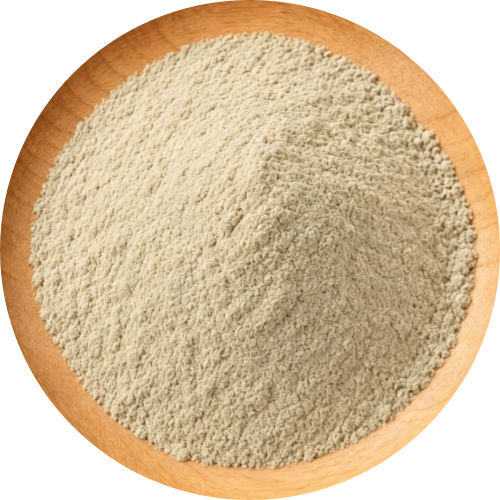
Black pepper is an agricultural crop, and black pepper extract is a processed ingredient. Its footprint depends on where and how the pepper is cultivated, how it is dried and transported, how piperine is concentrated, what solvents and energy are used, and how residues are managed. Without those facts, a buyer cannot responsibly infer that one extract has a lower environmental impact than another.
The same discipline applies to familiar claims. Plant-based is not a substitute for traceability. High purity does not itself demonstrate low resource use. A quality certificate may describe a management system without certifying environmental performance. A sustainability claim should identify its scope, supporting records, and limits.
From Marketing Language to Verifiable Evidence
Procurement teams can separate three evidence questions. First, what is the ingredient and can its botanical identity and active-compound specification be verified? Second, how is it made and controlled? Third, what environmental evidence covers cultivation, extraction, packaging, and distribution? A certificate or test report may answer one question while leaving the others open.
This distinction protects both buyers and suppliers. It allows a product page to communicate confirmed quality attributes without implying that unmeasured environmental benefits have been proven. It also gives product developers a practical list of follow-up questions before an ingredient is described as sustainable in a finished-product claim.
What Buyers Should Examine Before Calling an Ingredient Sustainable
Botanical Source and Agricultural Traceability
Start with the botanical name, the part of the plant used, the source region, and the level of traceability available for each batch. Ask whether the ingredient comes from cultivated or wild-collected material, how harvest practices are managed, and whether records link incoming raw material to the finished extract. Where relevant, request evidence for agricultural practices or certifications rather than relying on a general supplier statement.
Traceability does not automatically prove that cultivation is sustainable, but it makes the question answerable. It can help buyers identify risks such as unclear origin, inconsistent seasonal quality, or pressure on a sensitive source. The level of evidence should match the claim: a country of origin may support basic sourcing disclosure, while a farm-level environmental claim needs much more specific documentation.
Extraction Method and Resource Use
Ask suppliers to describe the extraction process at a useful level of detail. Important topics include the extraction medium, solvent recovery, energy and water demands, drying method, process yield, and treatment or reuse of plant residues. Commercial confidentiality may limit the disclosure of exact operating conditions, but it should not prevent a meaningful account of process controls and environmental management.
For black pepper extract, public product specifications often focus on piperine percentage and analytical methods. Those are useful for formulation, but they do not reveal which extraction solvents were used, how much energy was required, or whether residues were recovered or discarded. Those questions require separate process evidence.
Standardization and Formulation Efficiency
Standardized active content can make a botanical ingredient easier to formulate consistently. A defined piperine range and reliable assay allow a development team to calculate inclusion levels, compare incoming lots, and investigate deviations. Better control may reduce reformulation, rejected batches, or repeated testing. These are plausible operational pathways to less waste, not proof of a lower life-cycle footprint.
Concentrated extracts also require careful interpretation. A smaller inclusion rate may reduce the mass of ingredient added to a serving, but concentration can involve additional processing. Whether the overall impact improves depends on agricultural yield, extraction efficiency, energy use, solvent recovery, and the functional dose required. Buyers should compare functionally equivalent formulations rather than ingredient weight alone.
Testing, Safety, and Batch Consistency
A complete technical review may include botanical identity, active-compound assay, moisture, ash, particle size, heavy metals, pesticide residues, and microbiological limits. A batch-specific certificate of analysis (COA) should identify the lot, method, specification, result, and release status. Independent laboratory testing can provide added confidence when the risk, market, or claim warrants it.
These controls primarily address identity, quality, and safety. They matter to sustainability indirectly because inconsistent material can cause rework, line interruptions, rejected product, or avoidable disposal. However, analytical compliance does not establish low carbon emissions, responsible farming, or environmentally preferable extraction. Each claim needs evidence suited to that claim.
Why Quality Control Also Matters to Environmental Performance
Preventing Rejected Batches and Material Waste
A batch that misses its agreed specification can consume more than the ingredient itself. Manufacturers may need to repeat sampling, pause a production run, clean equipment, adjust a formula, or dispose of finished goods. Robust specifications and supplier communication can reduce the likelihood of those events, especially when an active botanical is used in a complex blend.
For black pepper extract, a consistent piperine assay and appropriate particle or dispersion properties can help formulators maintain reliable blending and dosage. The environmental benefit should be framed narrowly: dependable quality can support process efficiency and reduce avoidable waste. Quantifying an actual reduction requires the manufacturer to compare its own rejection, rework, and material-use data over a defined period.
The Limits of Quality Certificates
ISO-based quality systems and cGMP controls can offer useful evidence about documented procedures, manufacturing control, and consistency. They are not interchangeable with an environmental product declaration, a carbon footprint, a life-cycle assessment, or a farm-level sustainability certification. Buyers should record exactly what each certificate covers, who issued it, and whether it is current and applicable to the facility and product under review.
This distinction is especially important when supplier pages place quality badges beside environmental language. A certification can strengthen confidence in a particular management practice while leaving energy use, water consumption, emissions, land impacts, and packaging unanswered. Clear claim boundaries make procurement decisions more credible and reduce the risk of misleading downstream communication.
A Practical Evidence Checklist for Botanical Ingredient Buyers
A repeatable review process makes supplier comparisons more useful and helps teams avoid treating a single document as a complete sustainability assessment.
- Confirm the botanical identity, plant part, source region, and available batch traceability.
- Request information about cultivation, harvesting, and the supplier relationships behind the raw material.
- Ask for the extraction method, process inputs, solvent recovery approach, and residue-management practices.
- Review active-compound specifications, analytical methods, and recent lot-specific COAs.
- Verify relevant heavy-metal, pesticide, microbiological, and other safety controls for the intended market.
- Ask how water, energy, packaging materials, and transport are managed, and request quantified data where environmental claims depend on them.
- Separate quality, safety, and environmental certificates; confirm the exact scope of each.
- Compare ingredients at equivalent functional doses and include process yield and formulation performance in the assessment.
- Document evidence gaps, responsible owners, and follow-up dates before approving sustainability language.
- Reassess claims when suppliers, origins, extraction processes, or specifications change.
Evidence Categories Buyers Can Use
A practical file can be organized into three levels. Basic evidence includes specifications, test methods, COAs, and batch identification. Useful sourcing evidence adds origin, traceability, extraction information, and packaging or waste-management practices. Advanced environmental evidence may include verified energy and water data, a product carbon footprint, a life-cycle assessment, third-party audits, or farm-level documentation. The appropriate level depends on the decision and the environmental claim being considered.
Assessing Black Pepper Extract as a Case Example
Keep Ingredients’ Black Pepper Extract is described on its product page as a Piper nigrum extract with piperine options from 10% to 98%, including 95% and 98% specifications. The page identifies HPLC as the assay method and lists technical information such as moisture, ash, particle size, and testing for heavy metals and microbiological parameters. It also describes applications in nutraceutical and functional-food formulations.
These disclosures can help a buyer assess ingredient identity, standardization, selected quality controls, and potential formulation fit. The stated range may be relevant when a development team is comparing inclusion levels or deciding what specification to request. Buyers should still confirm the current specification, batch COA, intended-market compliance, and whether any water-dispersible option matches the target application.
The publicly available product information does not, by itself, establish where the pepper was cultivated, whether it was grown under a particular agricultural certification, which extraction solvents were used, how solvent recovery is managed, or the product’s energy, water, packaging, and transport footprint. Nor does an HPLC result certify sustainable sourcing. Those are appropriate supplier questions, not assumptions to fill with marketing language.
A responsible case assessment therefore has two parts. The first records what product and quality evidence is available. The second identifies environmental information still needed to substantiate a sustainability claim. That approach allows Keep Ingredients’ product details to serve as a starting point for due diligence without presenting unverified environmental performance as fact.
How Suppliers Can Build More Credible Sustainability Claims
Improve Supply-Chain Transparency
Suppliers can make sourcing claims more useful by naming the botanical species and plant part, stating the origin at the level supported by records, explaining the traceability system, and describing how changes in source or season are handled. If farm-level records or certifications are available, their scope should be explained. If they are not available, the claim should not imply that they are.
Connect Quality Data With Environmental Data
A credible technical package can keep quality and environmental evidence distinct while presenting both clearly. A specification and COA explain identity and lot quality. Process documentation explains how the extract is produced. Environmental indicators explain measured resource use or impacts. Third-party verification may increase assurance, but the method, boundary, date, and product scope should remain visible.
For buyers, comparable data are more valuable than broad promises. A supplier can state which facility and production period are covered, whether the figure is per kilogram of extract or per functional dose, and what upstream stages are included. These details make it possible to compare like with like and prevent a narrow metric from being presented as a complete sustainability result.
Avoid Unsupported Green Claims
Terms such as eco-friendly, sustainable extract, low-carbon botanical, and zero-waste ingredient need clear definitions and supporting evidence. A supplier should avoid implying that natural origin, high purity, or quality certification alone proves environmental superiority. Where data are incomplete, precise language is stronger: identify the verified attribute, state what it does and does not cover, and describe the evidence still being developed.
What a More Responsible Purchasing Decision Looks Like
A sound decision combines technical fit with evidence quality. Buyers should confirm that the ingredient works for the intended formulation, that the supplier can meet the specification consistently, and that safety documentation fits the market. They should then evaluate sourcing, extraction, resource use, packaging, and transport using records appropriate to the environmental question.
This avoids two common errors: rejecting a useful botanical simply because its environmental profile is not fully disclosed, and accepting a green claim because the ingredient is plant-derived. A structured evidence request gives the supplier an opportunity to clarify performance while allowing the buyer to communicate only what has actually been substantiated.
Frequently Asked Questions
Q1: Is a plant-based botanical extract automatically sustainable?
A: No. Sustainability depends on cultivation, sourcing, extraction, energy and water use, waste management, packaging, transport, and the quality of supporting evidence.
Q2: Does a standardized extract reduce environmental impact?
A: Standardization may improve formulation consistency and help prevent avoidable rework. It does not independently prove a lower environmental impact; process and life-cycle evidence are still needed.
Q3: Can HPLC testing prove that an ingredient is sustainable?
A: No. HPLC can verify a defined chemical or active-compound specification. It does not measure carbon emissions, water use, land impacts, or extraction efficiency.
Q4: What documents should buyers request from botanical ingredient suppliers?
A: Buyers can request specifications, lot-specific COAs, analytical methods, source and traceability information, extraction details, safety testing, packaging information, and environmental records relevant to the claim.
Q5: Are ISO and cGMP certifications environmental certifications?
A: Not by themselves. They generally address management or manufacturing controls within a defined scope. Separate evidence is required for environmental performance claims.
Q6: Why does batch consistency matter for sustainability?
A: Consistent material can reduce the risk of failed production, rework, rejected batches, repeat testing, and avoidable use of manufacturing resources.
Q7: What environmental information is often missing from botanical ingredient pages?
A: Public product pages may not disclose solvent recovery, energy use, water consumption, carbon footprint, farm-level traceability, packaging impacts, or plant-residue management.
Q8: How can a buyer avoid unsupported green claims?
A: Ask what each claim means, which product and supply-chain stages it covers, what data support it, who verified the data, and when the evidence was last updated.
Conclusion
A botanical ingredient becomes a credible sustainability choice through evidence, not through its plant origin alone. For black pepper extract, buyers can begin with the botanical identity, piperine specification, analytical method, and batch-level safety information, then ask separately about cultivation, extraction inputs, resource use, and traceability.
The product information published for Keep Ingredients Black Pepper Extract provides a useful technical starting point for assessing standardization and selected quality attributes. A fuller environmental assessment would require additional sourcing and process data. This distinction supports better procurement decisions and allows brands to make precise, defensible claims while encouraging suppliers to strengthen the evidence available across the botanical supply chain.
References
Sources
- FAO. Sustainability and Sustainable Development
- Link:
https://www.fao.org/sustainability/en/
Note: Provides context for sustainability across food and agricultural systems, including the need to consider interconnected production and resource issues.
- FAO. SAFA Guidelines: Sustainability Assessment of Food and Agriculture Systems
- Link:
https://www.fao.org/3/i3434e/i3434e.pdf
Note: Offers a framework for evaluating sustainability across agricultural and food supply chains rather than relying on a single product attribute.
- U.S. Environmental Protection Agency. Sustainable Materials Management Basics
- Link:
https://www.epa.gov/smm/sustainable-materials-management-basics
Note: Explains life-cycle thinking and resource efficiency across materials, useful for framing ingredient, packaging, and waste decisions.
- U.S. Food and Drug Administration. Food and Dietary Supplement Guidance Documents
- Link:
Note: Provides regulatory guidance context for food and dietary supplement manufacturers reviewing ingredient controls and compliance responsibilities.
- World Health Organization. Quality Control Methods for Herbal Materials
- Link:
https://www.who.int/publications/i/item/9789241506096
Note: Describes approaches to botanical material quality control and testing, relevant to identity, purity, and consistency discussions.
Related Examples
- Keep Ingredients. Black Pepper Extract
- Link:
https://keepingredients.com/products/black-pepper-extract
Note: The product page provides the piperine range, HPLC reference, applications, and selected quality specifications discussed as a case example.
- Keep Ingredients. Black Pepper Extract Product Collection
- Link:
https://keepingredients.com/collections/black-pepper-extract
Note: Shows the supplier’s black pepper extract offering and related product positioning for ingredient buyers.
Further Reading
- Custom Potency Black Pepper Extract for Nutraceutical Formulation
- Link:
https://www.exportandimporttips.com/2026/10/custom-potency-black-pepper-extract-for.html
Note: Discusses custom potency options for black pepper extract and provides additional formulation context for nutraceutical buyers.
- Standardized Black Pepper Extract and Consistent Supplement Formulation
- Link:
https://www.commerciosapiente.com/2026/10/standardized-black-pepper-extract.html
Note: Provides additional discussion of standardized black pepper extract and its relevance to consistent supplement formulation and ingredient selection.
This post was reproduced from: https://www.industrysavant.com/2026/10/what-makes-botanical-ingredient-more.html