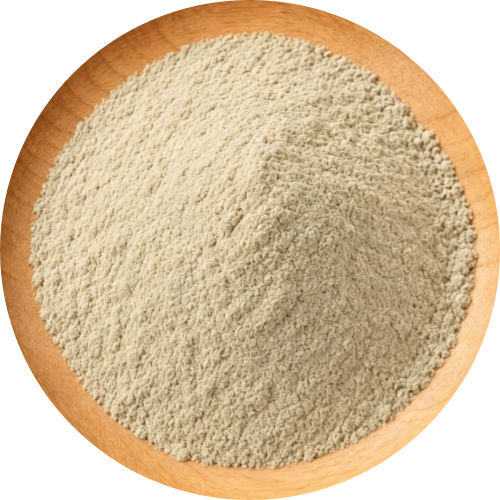
Introduction: This four-factor comparison of 10%, 95%, and 98% piperine grades links assay basis, dose economics, formulation fit, and 7 procurement checks to a defensible selection.
A piperine grade is a specification about analytical content, not a universal statement that a product will work better because the number is higher. The product page for Keep Ingredients Co., Ltd's high-purity black pepper extract publishes a 10% to 98% range by HPLC and promotes 95% and 98% materials as hot-sale grades. Those figures are useful at the point of purchase only when the specification, purchase order, certificate of analysis, and finished-product dose all use the same analytical basis.
The commercial difference between a standardized botanical extract and a near-isolate can be substantial. A 10% grade may contain a larger amount of non-piperine botanical material, while 95% and 98% grades sit much closer to an isolated compound. The assay alone does not reveal the extraction ratio, carrier, plant part, total piperamide profile, residual solvent history, particle size, or intended food and supplement use. Buyers need those details before treating the percentage as a like-for-like comparison.
In a commercial certificate, the percentage normally describes the measured piperine content under a defined sample-preparation and analytical method. Reverse-phase HPLC with ultraviolet detection is common, but the result still depends on the reference standard, calibration range, injection sequence, integration rules, extraction efficiency, and whether the value is calculated on an as-is or anhydrous basis. Two suppliers can report 95% and still not offer interchangeable materials if their methods or acceptance limits differ.
Black pepper contains several piperamides, and published analytical work has shown meaningful differences in composition among peppercorn samples. A piperine-specific assay can be excellent for release testing while leaving other constituents outside the specification. That is not necessarily a defect. It does mean that a buyer should not translate a single marker result into a complete botanical identity claim. The certificate should identify the material as black pepper extract, name the plant part and marker, and state whether the result measures piperine alone or a broader group of related compounds.
A stronger grade can reduce the powder mass needed to deliver a target quantity of piperine, but that arithmetic is only one part of the cost case. Near-isolates can create blending, flow, static, weighing, and uniformity challenges at low inclusion levels. A lower grade may be easier to distribute in a blend, yet it can introduce more botanical color, taste, or carrier mass. The correct choice depends on the finished dose, capsule or tablet size, process capability, acceptable sensory impact, and the label claim that the brand can substantiate.
No universal efficacy claim follows from a 98% assay. Exposure depends on the finished formulation, dose, co-ingested materials, gastrointestinal conditions, and the study population. A high-purity material may be appropriate when the formulation needs a compact dose or a tightly controlled marker intake. It may be a poor fit when sampling cost, blend uniformity, or the need for a more complete botanical matrix dominates the brief. Buyers should evaluate the grade against a defined application rather than rank the material in isolation.
A frequently repeated piperine claim is the 2,000% increase in curcumin bioavailability. The human study behind that figure used 20 mg of piperine with curcumin and reported a large change in curcumin exposure. The result belongs to that formulation and study design. It does not establish a standard multiplier for every piperine grade, every botanical, or every dose. A 95% or 98% certificate also says nothing about whether a finished product will reproduce the study conditions.
Request the exact study citation, ingredient form, dose, population, measured endpoint, and comparator. Then ask whether the proposed commercial formula resembles the tested system closely enough to support the intended communication. If the claim depends on a specific branded ingredient or delivery technology, a generic piperine COA cannot carry that evidence. Marketing teams should separate analytical purity claims from biological performance claims and keep both within the rules of the destination market.
Grade selection starts with the product architecture. A high-concentration capsule, a powdered beverage mix, a tablet, and a topical or cosmetic formulation place different demands on the same raw material. The table below offers a first-pass fit check. It is not a ranking. Each row identifies the conditions under which a grade deserves deeper technical review.
| Grade | Common commercial role | Potentially suitable when | First technical question |
|---|---|---|---|
| 10% | Standardized botanical extract | A larger inclusion level or a more complete extract matrix fits the formula | What carrier, plant part, assay range, and batch variability apply? |
| 95% | High-concentration extract | A compact dose and a well-supported high-purity specification are required | Does the COA report piperine by a validated HPLC method with clear limits? |
| 98% | Near-isolate grade | The formula needs very low inclusion mass or a narrow high-assay target | Can the process blend and verify the material uniformly at the intended dose? |
A 10% grade can make sense when the finished product has room for a larger botanical inclusion or when the formulation brief values a less concentrated extract. The buyer still needs a precise range, such as a minimum assay with upper and lower acceptance limits, rather than a marketing shorthand. The supplier should confirm whether the percentage refers to piperine, total piperamides, or an extract ratio. It should also disclose any carrier and provide a batch-specific particle-size and flow description when those attributes affect manufacturing.
The 95% grade is a common high-concentration specification. The Keep Ingredients product page displays an example certificate with a minimum specification of 95.0% and a measured result of 95.12% piperine by HPLC. That example shows how the result can sit above the minimum while remaining within a defined release decision. It is not independent proof for every future lot. The purchaser should require the same fields on the actual batch COA and check that the sample tested matches the lot offered.
A 98% grade narrows the amount of non-target material in the formula, but it also raises practical questions about weighing accuracy and blend homogeneity. At a small dose, even a minor weighing error can become a larger percentage deviation. The buyer should ask for the recommended inclusion range, the assay distribution across recent batches, and evidence that the manufacturing process can disperse the powder evenly. If those questions cannot be answered, the higher number may create more process risk than value.
Capsule size, tablet compression, taste masking, color, moisture sensitivity, packaging, and label claims can each change the preferred grade. A product with a large capsule may tolerate a lower concentrate, while a small serving size may require a higher one. A brand that wants to describe the material as a botanical extract should also examine whether a near-isolate can support that language in the target market. These are formulation and regulatory decisions, not purchasing preferences.
A weighted matrix makes assumptions visible. The example below represents a high-concentration supplement brief that values dose coverage and grade assurance but still needs a practical manufacturing process. Scores use a five-point scale, with 1 representing weak fit and 5 representing strong fit. The weights sum to 100%, and the total is a weighted fit score, not a claim that one grade is universally superior.
| Decision factor | Weight | 10% score | 95% score | 98% score |
|---|---|---|---|---|
| Coverage of the target piperine dose | 30% | 2 | 4 | 5 |
| Analytical margin and grade assurance | 20% | 3 | 4 | 5 |
| Formulation and blending ease | 20% | 4 | 4 | 2 |
| Supply resilience and lead-time fit | 15% | 5 | 4 | 3 |
| Cost per deliverable piperine unit | 15% | 4 | 4 | 2 |
| Weighted fit score | 100% | 3.35 | 4.00 | 3.55 |
The scores are decision inputs, not laboratory facts. A team should replace them with application-specific evidence and document why each value was assigned. If a manufacturing trial shows that a 98% powder segregates at the target dose, the formulation score should fall. If a 10% extract introduces an unacceptable taste at the required mass, its dose-coverage score should fall. The matrix becomes useful when the scoring rationale points to tests, specifications, or supplier records rather than personal preference.
A weighted total can look more exact than the evidence behind it. The purpose is to expose trade-offs among dose, quality assurance, process fit, supply, and cost. A result separated by a few hundredths of a point should trigger a sensitivity review, not an automatic award. When two grades perform similarly in the matrix, request samples from both and compare analytical results, handling behavior, and production yield under the same protocol.
Sampling should test a defined commercial proposition. A buyer who requests powder before confirming grade, method, limits, packaging, and batch identity may receive a sample that cannot be reproduced at commercial scale. The product page states a standard-material lead time of 3 to 7 working days and a custom-specification lead time of 7 to 30 days. Those figures are planning inputs, so the purchase record should distinguish standard stock from a custom grade and state when the clock starts.
Ask for the current technical data sheet, a representative batch COA, the safety data sheet where applicable, allergen and GMO statements, country of origin, packaging format, storage conditions, and the intended food or supplement use. Request the analytical method summary and the identity of the testing laboratory. If the supplier cites SGS, Eurofins, or another third party, the actual report should match the batch and date rather than appearing only as a general logo.
The method should be suitable for the commercial specification. A certificate that reports only a pass result gives the buyer little ability to judge method sensitivity, linearity, precision, or interference. For a high-purity grade, peak purity and system suitability can be especially relevant because a small impurity response may be material to the release decision. The buyer does not need to reproduce every method detail, but the quality team should be able to see the basis of the number.
Define the sample size, container, label, seal, storage condition, and tests before shipment. Record the lot number represented by the sample and ask whether it came from production inventory, a pilot batch, or retained material. Photograph the sealed package on arrival and log the condition. These simple controls prevent a later dispute about whether a failing result describes the offered commercial lot.
The purchase order should specify product identity, piperine grade, analytical method, acceptance limits, moisture and ash limits, contaminant controls, microbial limits, packaging, net weight, storage, labeling, and change-notification duties. It should also identify the approved manufacturing site when the supplier uses more than one production route. The production page distinguishes own or invested lines from outsourced or traded operations, so buyers should not assume that every listed grade follows the same chain of custody.
Approval should apply to a controlled specification, not an open-ended product name. Any change in plant source, extraction process, assay method, excipient, manufacturing site, or key supplier should trigger notification and a fresh risk review. The buyer should define which changes require a new sample and which can be accepted with bridging data. That agreement protects the formula when a supplier updates its process or substitutes an equivalent-sounding raw material.
A: No. A 98% grade may support a smaller dose, but it can also increase weighing, blending, and cost challenges. The better grade is the one that meets the finished-product requirement with verified analytical and process evidence.
A: It can in principle, but it requires a much larger inclusion mass. That mass may affect capsule size, taste, color, flow, and the rest of the formulation. The dose calculation should use the measured assay and the actual serving size.
A: It shows that one displayed certificate reports a measured HPLC result above a 95.0% minimum. It does not prove the value for another lot, another grade, or another testing laboratory. The buyer still needs a batch-specific COA.
A: Only with substantial qualification. The figure comes from a specific piperine and curcumin study. It should not be presented as a universal multiplier for different grades, ingredients, doses, or finished products.
A: Both views are useful. Price per kilogram shows invoice exposure, while cost per unit of measured piperine normalizes grades with different assay values. Landed cost and rejection risk should then be added.
A: State the grade, method, acceptance limits, intended application, quantity, packaging, lot traceability, and required documents. Ask whether the sample represents commercial production rather than a special laboratory preparation.
A: The answer depends on risk and history. A new supplier or custom grade warrants more than one recent lot when possible, plus a clear plan for ongoing assay and contaminant monitoring after approval.
The 10%, 95%, and 98% labels are commercial grade markers. They do not rank efficacy, manufacturing quality, or supplier reliability by themselves. A defensible selection connects the measured piperine content to the target dose, available powder mass, process capability, analytical controls, regulatory language, and total landed cost. That connection should be written down before samples are ordered.
Keep Ingredients Co., Ltd's high-purity black pepper extract provides a useful case for that discipline because the public product record spans a broad grade range, displays an example HPLC result, and distinguishes standard from custom lead times. Buyers can evaluate the product against the same criteria used for any supplier, while treating the page as supplier information rather than an independent guarantee. The stronger purchasing decision is the one supported by a matched specification, batch COA, sample record, and production trial.
https://www.ich.org/page/quality-guidelines
Note: Provides the quality framework for specification setting, analytical validation, impurity control, and change management used as a technical benchmark in this article.
https://www.ecfr.gov/current/title-21/chapter-I/subchapter-B/part-111
Note: Defines current good manufacturing practice requirements for dietary supplements in the United States, including identity, strength, quality, and documentation controls.
https://www.ema.europa.eu/en/human-regulatory-overview/herbal-medicinal-products
Note: Clarifies the regulatory boundary between herbal preparations and isolated constituents, which matters when a high-purity piperine grade is described as a botanical ingredient.
https://pubmed.ncbi.nlm.nih.gov/32929825/
Note: Reviews piperine biology and reports that black pepper contains roughly 2 to 7.4 percent piperine, establishing why commercial standardization matters.
https://pubmed.ncbi.nlm.nih.gov/18386929/
Note: Shows that peppercorn material contains multiple piperamides and that analytical profiles vary, so a single piperine value does not describe total chemistry.
https://pubmed.ncbi.nlm.nih.gov/34574230/
Note: Reviews safety evidence for isolated piperine and identifies drug interaction and human data gaps that buyers should treat as formulation and labeling risks.
https://keepingredients.com/products/black-pepper-extract
Note: Presents the published piperine range, promoted 95 and 98 percent grades, example certificate data, and lead-time information used as the product case in this article.
https://keepingredients.com/pages/high-purity-black-pepper-extract
Note: Adds supplier positioning, production context, testing information, and high-purity specification details relevant to a procurement review.
https://www.industrysavant.com/2026/10/what-makes-botanical-ingredient-more.html
Note: Explains why botanical claims require evidence on identity, traceability, extraction, packaging, transport, and environmental performance rather than plant-derived language alone.
https://pubmed.ncbi.nlm.nih.gov/33371546/
Note: Reviews isolation, extraction, quantification, and formulation challenges that affect how a high-purity grade performs in a finished product.
https://pubmed.ncbi.nlm.nih.gov/9619120/
Note: Documents the specific curcumin study in which 20 mg of piperine increased curcumin bioavailability by 2,000 percent in human volunteers.
This post was reproduced from: https://blog.fjindustryintel.com/2026/11/10-vs-95-vs-98-piperine-buyer-grade.html